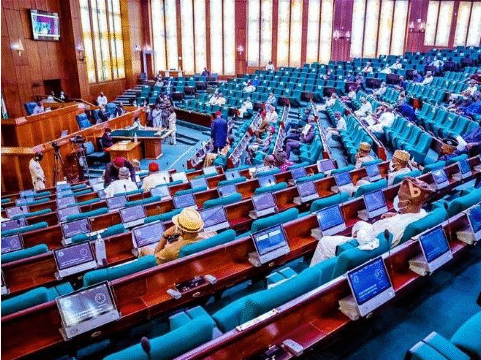

Compulsory Voting Bill Sparks Division in National Assembly…A proposed bill seeking to make voting compulsory for all eligible Nigerians has stirred sharp divisions within the National Assembly, igniting debate about its necessity, enforceability, and potential impact on the country’s democratic process.
The bill, titled “An Act to Amend the Electoral Act 2022 to Make Voting Mandatory for All Nigerians of Majority Age,” is currently advancing through legislative processes but is encountering resistance from some lawmakers and stakeholders.
The bill, sponsored by Speaker of the House of Representatives, Tajudeen Abbas, proposes stiff penalties for eligible voters who fail to cast their ballots during national and state elections. If passed into law, individuals who do not vote could face a fine of up to ₦100,000 or a six-month prison sentence. Proponents argue that this measure is crucial to combat the growing trend of voter apathy that has characterized recent elections in Nigeria. In the 2023 presidential election, for example, only about 25 million of the 94.4 million registered voters turned out to vote—a turnout of less than 27 percent.
Supporters of the bill say mandatory voting would reinforce Nigeria’s democratic foundations by increasing participation and ensuring that elected leaders more accurately reflect the will of the people. Among those backing the proposal is the Centre for Convention on Democratic Integrity (CCDI), which has publicly endorsed the bill. According to CCDI President, Olufemi Aduwo, Nigeria’s democracy is at risk when voter turnout remains consistently low, and compulsory voting is one way to address that. Aduwo cited countries like Belgium, Australia, and Brazil, where mandatory voting laws have contributed to significantly higher voter participation rates and more inclusive governance.
However, the bill is not without strong opposition. Critics within the National Assembly and from the wider public have questioned both the timing and the practicality of the legislation. Some lawmakers have raised concerns that the bill does not address the root causes of low voter turnout, such as insecurity at polling units, lack of confidence in the electoral system, poor civic education, and disenchantment with political leadership. They argue that rather than punishing citizens for not voting, the government should focus on restoring public trust in the process and creating a more enabling environment for voters.
Editorial voices have also weighed in. A recent editorial from The Nation newspaper described the bill as ill-conceived and poorly timed. The piece argued that imposing fines or jail terms would not inspire civic duty, but could further alienate a population already skeptical about the value of participating in elections. The editorial warned that rather than encouraging voter participation, punitive measures could provoke resistance and resentment.
Beyond philosophical objections, there are also practical questions about how such a law would be enforced in a country as large and complex as Nigeria. The Independent National Electoral Commission (INEC), which already faces logistical challenges during elections, would be tasked with not only managing the conduct of elections but also identifying and prosecuting those who fail to vote. Some lawmakers doubt that the electoral body currently has the infrastructure or capacity to take on that additional burden, especially given widespread issues of insecurity, technical failures, and voter disenfranchisement.
READ MORE: Anambra Governor Soludo Launches ‘Solution Lens’ to Enhance Governance Transparency
Others caution that mandatory voting, without adequate support systems, risks becoming a hollow gesture. They argue that unless accompanied by electoral reforms, robust civic education, and efforts to ensure free and fair elections, the bill could end up being counterproductive. For many Nigerians, especially those in remote or conflict-affected areas, voting is not simply a choice—it’s a challenge.
As the debate continues, the proposed compulsory voting law remains a contentious topic, both within the chambers of the National Assembly and in the public domain. Whether it ultimately passes or not, the bill has reignited important national conversations about civic responsibility, electoral reform, and the future of Nigeria’s democracy. The question now is whether compulsion can truly inspire participation—or whether the solution lies in building a system that earns the trust and engagement of its citizens.