
December 8, 2025
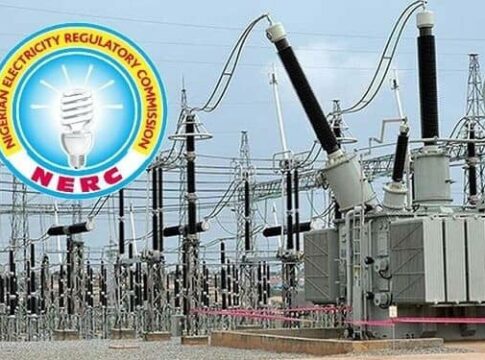
Experts in the electricity sector and the Nigerian Electricity Regulatory Commission, NERC, are currently having disagreement over the factors driving the increase in the revenue of electricity distribution companies, DisCos.
While the experts have pinned down the increase in revenue generation in the sector to customers’ exploitation, NERC attributed it to efficiency in revenue collection.
According to the experts, customers are made to pay for power amidst blackout.
Meanwhile, electricity Distribution Companies, DisCos, have recorded a huge jump of about 27 per cent in revenue hitting N1.713 trillion in nine months, from January to September 2025.
This is as against the N1.249 trillion recorded in the corresponding period of 2024.
The latest report of the Nigerian Electricity Regulatory Commission, NERC, on Commercial Performance of the DisCos, also showed that total revenue collected by DisCos in September 2025 alone stood at N196.26 billion out of the N241.54 billion total energy bills issued during the period under review, indicating N49.28 billion unpaid bill.
READ MORE; NERC Wants FG To Invest $2 Billion REA Fund In Stimulating Industrial Power
But the revenue trend showed the DisCos’ have recorded steady rise in revenue quarter-on-quarter – N559.3 billion in the first quarter of the year, Q1’25, N573.5 billion in Q2’25, and N581.3 billion in Q3′ 25.
The data from NERC also showed rising efficiency in billing and collection of revenue.
According to NERC, the billing efficiency, was 86.43%, while revenue collection efficiency was 81.25%. while revenue recovery was high, with 83.45% recovery efficiency.
NERC said DisCos, such as Eko, Abuja, and Ikeja Electric, remained strong performers across billing, collections and recovery efficiency.
Aba, according to the facts sheet, achieved a 102.85 per cent billing efficiency, reflecting improved energy optimisation and legacy recovery.
Benin, Port Harcourt, and Kano posted moderate efficiency levels, while Jos, Kaduna, and Yola continued to trail and show room for improvement.
READ MORE; Diverse Views Trail Proposed NERC’s Net Billing Plan.
NERC explained that the “figures give a clear picture of how effectively DisCos are billing, collecting, and recovering revenue, key indicators for strengthening liquidity and improving service delivery across the Nigerian Electricity Supply Industry, NESI.”
However, industry experts are not unhappy with the impressive financial performance of the DisCos, especially at the backdrop of unsatisfied consumers who are paying the bills amid darkness.
An Energy Economist, Professor Wumi Iledare, while commenting on the situation, said, “The anomaly in Nigeria’s electricity pricing structure is what appears to be driving revenue growth not efficiency, not improved service delivery, and certainly not fairness.
“First, the estimated billing system is deeply problematic, with cross-subsidies embedded in ways that disproportionately burden low-income households. Those who can least afford it end up paying the most for power they often do not receive.
“Second, the Band Pricing approach has created further distortions. I am not aware of any energy pricing framework anywhere in the world that is this inefficient in resource allocation while simultaneously ignoring ethics, equity, and effectiveness.”
READ MORE; NERC Introduces Stiffer Penalties For Energy Theft
A power sector operator, who spoke on condition of anonymity, revealed that, “NERC has a lot of responsibility in ensuring Nigerians are getting a commensurate services received as utility, as the regulators have the yam and the knife.
“For over 12 years, they have refused to do the needful thereby causing harm across the power sector value chain.”
In the same vein, convener and Executive Director of PowerUp Nigeria, a Power Consumer Advocacy Group, Adetayo Adegbemle, said Nigeria’s electricity subsidy was unsustainable as it constituted a huge financial burden on the federal government.
He said: “Historically, the Nigerian government has been paying electricity subsidy to the Nigeria Electricity Supply Industry, NESI. This means there is the cost reflective tariff of supplying 1kWh (kilowatt hour), and the allowed tariff consumers are “allowed” to pay.
“This variance, otherwise called subsidy, has now turned into an elephant in the China ware shop. The subsidy is as a result of government policy consideration on welfarism, targeted at supporting the social welfare of consumers who might not be able to pay the high true cost of the service.
READ MORE; Electricity Consumers Lament Over Tariff Hike Amidst Epileptic Supply
“Economic stability, aimed at ensuring a stable and affordable energy supply, is essential for economic development, and political stability that further aims at mitigating possible social unrest and creating political instability.
“The federal government in 2020, with the introduction of Service Based Tariff, SBT, decided to phase out subsidy on electricity tariff because of the strain it is putting on government finances, and the inefficiencies it promotes in the energy sector.