Petrol Price War Forces Closure of Nearly 5,000 Fuel Stations, Disrupting Supply and Hurting Consumers…A fierce petrol price war in Nigeria has led to the closure of almost 5,000 fuel stations, causing widespread disruptions in the fuel supply chain.
The battle for dominance in the petroleum sector has had far-reaching consequences, affecting not only fuel station owners but also consumers across the country.
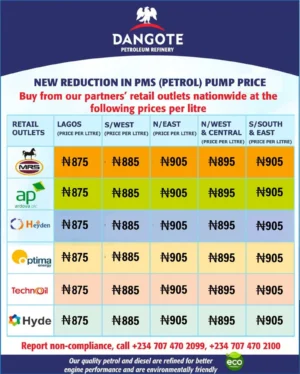
The dramatic shift in petrol prices was sparked by the operations of the Dangote Refinery, owned by Aliko Dangote, Africa’s wealthiest individual.
The refinery began selling petrol at significantly reduced prices, which immediately undercut the cost of fuel provided by the Nigerian National Petroleum Corporation Limited (NNPCL), the state-owned oil company. This price reduction initiated a competitive race among fuel marketers, with many offering even lower prices in an effort to capture market share.
The competition grew more intense when the Nigerian government fully deregulated the downstream oil sector, eliminating fuel subsidies.
This move allowed market forces to set the prices, and as a result, fuel marketers were left to navigate a more unpredictable and competitive environment.
For many independent fuel marketers, the shift in pricing proved to be a heavy burden. Marketers found themselves unable to compete with the drastic price cuts, leading to significant financial losses.
As the price war deepened, many small and medium-sized fuel stations had no choice but to reduce their purchases of fuel from wholesalers, while others scaled back their operations altogether.
In the most extreme cases, some fuel stations shut their doors either temporarily or permanently due to the unsustainable business conditions.
Reports suggest that nearly 5,000 fuel stations across the country have closed, some of them for good, further exacerbating an already fragile fuel distribution network.
The impact on consumers has been severe. Although petrol prices were reduced in some areas, the closures of fuel stations led to fuel shortages in multiple regions, especially in border areas where anti-smuggling operations by the Nigeria Customs Service forced over 400 stations to shut down.
These closures have created a significant supply gap, leaving motorists with few options for refueling. In addition, the scarcity has caused fuel prices to surge in neighboring countries like Niger, where petrol prices have reached unsustainable levels, further deepening the crisis in the region.
READ MORE: Guardiola Threatens to Quit Man City Over Squad Size Concerns
The Nigerian government has attempted to stabilize the situation, with the NNPCL and Dangote Refinery working together to sell crude oil in naira to encourage local transactions.
However, disagreements over pricing and currency exchange rates have hampered these efforts, contributing to the current instability in the market.
With petrol prices fluctuating rapidly, both consumers and businesses are left uncertain about the future of the fuel supply in the country.
While some consumers have benefited from the lower petrol prices offered by certain marketers, the long-term effects of the price war are becoming increasingly evident.
Fuel station closures have disrupted daily life, leaving many Nigerians struggling to find reliable access to petrol. Those fortunate enough to find fuel are often faced with long queues at the few stations still operating, leading to frustration and further delays.
The government faces a difficult task in addressing the issue, as it seeks to strike a balance between fostering healthy competition in the sector and ensuring the sustainability of fuel distribution.
Industry stakeholders have called for a more stable pricing structure that allows for competition without destabilizing the entire market.
Without such measures in place, the ongoing price war and resulting fuel shortages are likely to continue, creating economic ripple effects that extend far beyond the petroleum sector.
As the crisis unfolds, both the government and industry players must come together to find solutions that restore order to the fuel market.
The closure of thousands of fuel stations is a clear indication that unchecked price competition can have disastrous consequences, not just for businesses, but also for ordinary citizens.
Moving forward, it will be essential for all parties involved to prioritize stability, sustainable pricing, and the long-term health of the sector to avoid further disruptions.