
December 10, 2025
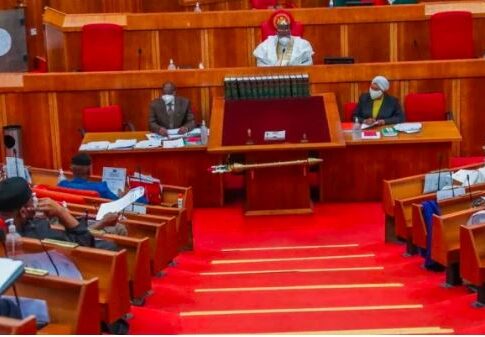
The Senate, has intervened in the brewing crisis in Nigeria’s education sector, over the new examination guidelines that lawmakers say could spell disaster for hundreds of thousands of secondary school students, and has therefore summoned the Minister of Education, Dr Tunji Alausa, and the Head of the National Office of the West African Examinations Council, WAEC, Dr Amos Dangut.
Fresh WAEC rules for candidates sitting for the 2025/2026 Senior Secondary Certificate Examination (SSCE), are at the centre of the controversy, which drastically altered subject requirements for students in Senior Secondary School 3 (SS3).
The sudden policy shift, coming barely months before the examinations, senators warned that could trigger mass failure and undermine confidence in Nigeria’s education system.
Senator Sunday Karimi (APC, Kogi-West) who raised the motion, faulted WAEC’s decision to implement a new curriculum immediately, despite earlier indications that the changes were meant to take effect in two years.
READ MORE; FG Says Arts, Commercial, Science Students Are Free To Choose Any WAEC Subjects.
According to senator Karimi, the guidelines were originally designed for students presently in SS1, who would sit for the SSCE in the 2027/2028 academic session, not those already preparing for the 2025/2026 May/June examinations.
He painted a grim picture of the consequences, noting that key subjects such as Computer Studies, Civic Education and all previously approved trade subjects had been removed from the SSCE subject list for 2026.
The senator said the decision effectively wipes out years of preparation by students and schools across the country.
Even more troubling, senators heard, is the ripple effect of the removals. With the affected subjects gone, students across science, humanities and business tracks are left with a maximum of six subjects, far below WAEC’s own requirement of a minimum of eight and a maximum of nine subjects.
This, Karimi argued, would force candidates to register for between two and three entirely new subjects they have never been taught and for which they are grossly unprepared for just months before the examinations.
“This is how mass failure begins,” Karimi cautioned, adding that reform, no matter how well-intended, must be phased and humane.
Senators across party lines echoed the concern, agreeing that although curriculum reform is long overdue, its timing could unfairly punish present SS3 students.
READ MORE; Reps Want Ministry Of Education, WAEC To Put CBT Exams On Hold Till 2030
The senate, urged WAEC and the Ministry of Education to exempt the 2025/2026 candidates and apply the new rules only to students sitting for the 2027/2028 examinations.
Former president of the Nigeria Labour Congress, NLC, Sen Adams Oshiomhole, who was particularly blunt, warned against what he described as a habitual rush to policy implementation without groundwork.
Oshiomhole said, “We wake up, think of an idea and immediately begin to implement it.”
“Do we have enough teachers? Have laboratories been prepared? The evidence doesn’t exist. We shouldn’t plan in a way that will embarrass us as a nation.”
Former Lagos State deputy governor, Sen Idiat Adebule, supported the motion but called for a thorough investigation, noting that decisions of this magnitude are traditionally discussed and endorsed by the National Council of Education, which includes commissioners of education from all 36 states.
Chairman of the Senate Committee on Appropriations, Sen Adeola Olamilekan, also added his voice, stressing that examinations must be based on prior learning, not abrupt policy shifts.
“Students must have adequate tutoring before WAEC can examine them,” insisting that the Minister of Education had critical questions to answer.
READ MORE; Stakeholders Clash with WAEC, NECO Over Shift to Computer-Based Testing for SSCE
In his concluding remarks, Senate president Godswill Akpabio, queried the logic behind removing Computer Studies and Civic Education at a time when Nigeria is pushing digital literacy and civic responsibility.
The Senate, thereafter, referred the matter to the Committee on Basic and Secondary Education, mandating it to investigate the new WAEC guidelines and report back to the chamber within two weeks.